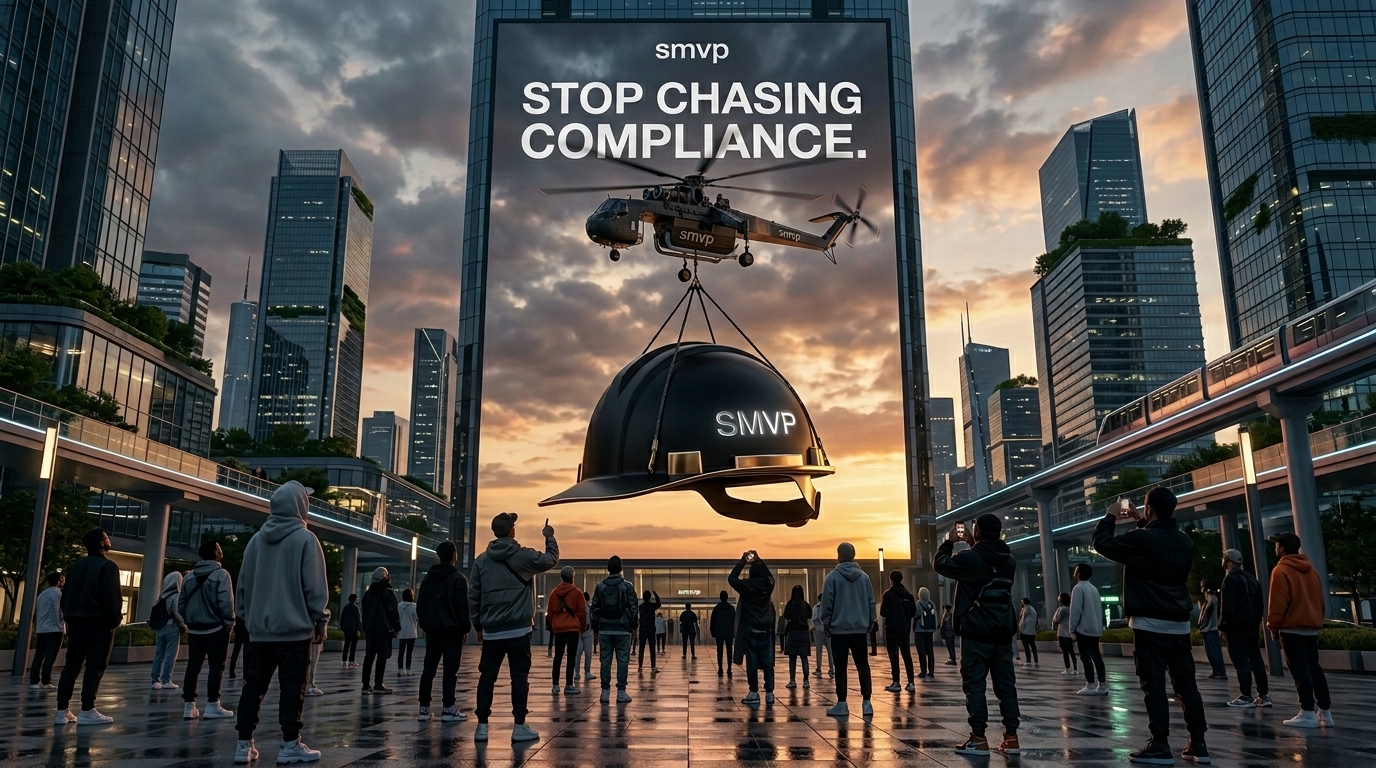
STOP CHASING COMPLIANCE
Jun 30, 2026Why HR Teams Struggle with the 8-Hour Mandatory OSH Training — and Why Self-Paced Learning Is the Smarter Fix
Ask almost any HR officer in the Philippines about the 8-hour mandatory OSH training and you'll hear the same quiet frustration. It isn't that they don't want to comply. It's that making it happen — across shifts, branches, fieldwork, and a steady stream of new hires — turns a simple eight-hour requirement into a never-ending administrative chase.
The training itself is straightforward. The logistics around it are not. And for most HR teams, that gap between intention and execution is exactly where compliance starts to slip.
This article breaks down why the traditional approach is so hard to sustain, and why a structured, self-paced model solves the part of the problem that almost everyone overlooks: monitoring.
What the 8-Hour Mandatory OSH Training Actually Is
The 8-Hour Mandatory Occupational Safety and Health Training is the foundational safety seminar every Filipino worker is required to undergo. Its legal basis is clear: under Republic Act No. 11058, all workers must complete a mandatory eight-hour safety and health seminar as prescribed by the Occupational Safety and Health Standards and administered through DOLE.
DOLE Department Order No. 198-18 reinforces this by defining the Workers' OSH Seminar as a mandatory eight-hour module delivered by the workplace safety officer in line with the OSH Standards.
The content is meant to give every worker a working grasp of the essentials — recognizing hazards and risks, understanding control measures, knowing what to do in an emergency, and understanding their own rights and responsibilities on the job.
Put plainly: this is not a box to tick or a certificate to file. It's the baseline knowledge that makes a safer workplace possible in the first place.
Why It Matters to Companies — Not Just to Safety Officers
Every employer carries a duty to make sure workers genuinely understand workplace safety before they're exposed to its risks. A worker who can't recognize an unsafe act, doesn't know the emergency procedure, or has never been oriented on basic safety rules isn't just a personal liability — they're a risk to everyone around them.
A well-delivered 8-hour seminar builds awareness across the things that matter most: workplace hazards and risks, basic safety procedures, emergency response, the proper way to report unsafe conditions, and the role each worker plays in keeping daily operations safe. DOLE has also been explicit that the seminar should include joint employer–employee orientation on safety, not a one-sided lecture.
For HR, this reframes the whole exercise. The training isn't only a safety concern — it's a compliance, onboarding, documentation, and monitoring responsibility, all rolled into one. And it's that last piece that quietly becomes the heaviest.
Where HR Teams Actually Get Stuck
In a real workplace, employees don't share one schedule. They work different shifts, sit in different departments, operate across branches, rotate through fieldwork, and get hired at different times of the year. Trying to gather all of them into a single live eight-hour session is where good intentions meet hard reality.
A few recurring pain points show up again and again:
Scheduling never lines up. Some workers are on shifting duty, some are deployed to operations or the field, and some were hired the week after the last batch. To include everyone, HR ends up running the same training over and over.
Attendance is hard to verify. Live sessions usually track attendance through manual sheets, screenshots, or meeting logs. Afterward, someone still has to reconcile who attended, who was absent, and who slipped out early — and that reconciliation only gets messier as headcount grows.
Onboarding never stops. This is the biggest one. Even if a full batch was trained last month, new employees keep arriving this month. For any company with continuous hiring, the requirement resets endlessly, and HR is left scheduling fresh sessions just to keep new hires compliant.
Completion is hard to prove. Inviting a worker to training isn't evidence of anything. HR needs to know whether each person actually started, finished every module, passed the assessment, and received a certificate — and who's still pending. Without a system, that proof lives in scattered manual records.
Workers forget, and then it cascades. Heavy workloads, sudden duty assignments, weak internet, or plain forgetfulness cause people to miss sessions. Each miss means another reminder, another reschedule, and another manual update to the list.
HR becomes a full-time training tracker. Instead of focusing on recruitment, employee relations, payroll coordination, or compliance reporting, HR ends up perpetually checking who finished, who didn't, and who needs chasing.
Notice the pattern. The problem is rarely the eight hours of content. The real problem is monitoring.
How Self-Paced Training Solves the Monitoring Problem
Self-paced training changes the model in one important way: instead of forcing everyone into a single fixed timeslot, it lets each worker complete the training through an online learning platform within a defined training window. Workers get flexibility. HR gets visibility — and visibility is what was missing all along.
With a properly structured self-paced system, HR can see at a glance who registered, who started, who's currently in progress and on which module, who has completed the full course, who hasn't begun, who passed the assessment, and who's ready for a certificate.
That single dashboard view replaces dozens of manual follow-ups — and it scales cleanly for companies with large workforces, multiple branches, or rolling hiring.
Self-Paced Doesn't Mean Unsupervised
There's a common misconception worth correcting: self-paced does not mean the worker is left to figure it out alone, with no oversight and no proof of learning. Done right, it's the opposite.
A credible self-paced 8-hour OSH program still carries real structure — organized modules, clear learning objectives, video or guided lessons, knowledge checks and quizzes, completion tracking, a proper assessment, certificate issuance, and an admin monitoring report built specifically for HR.
That last component is the whole point. HR doesn't just need workers to take the training; it needs documented evidence that each one completed it properly.
The Practical Payoff for HR
Once monitoring lives inside the platform instead of inside someone's inbox, the day-to-day load drops noticeably:
- Easier monitoring. Progress can be checked anytime, so it's simple to see who's done, who's mid-course, and who needs a nudge.
- Smoother onboarding. New hires can be enrolled immediately, with no waiting for the next live batch and no gap in their safety orientation.
- Less operational disruption. Workers don't all have to step away from their posts at the same moment; they complete the training within the schedule the company allows.
- Cleaner documentation. Completion records, assessment results, and certificates stay organized in one place — far tidier than a stack of attendance sheets.
- Real scalability. For growing companies and multi-branch operations, enrolling new workers into a system beats repeating live sessions indefinitely.
- More convenient for workers. People learn at their own pace within the allowed window, which makes the training more accessible and easier to finish.
The Real Goal: Compliance That Comes with Genuine Learning
It's worth keeping the end goal in view. The purpose of the 8-hour mandatory OSH training was never certificate collection. The purpose is for workers to genuinely understand safety.
A certificate matters — but a certificate without understanding is weak compliance. Workers need to know why safety matters, which hazards exist in their workplace, what to do in an emergency, and how their own actions help prevent accidents. Self-paced training serves that goal well precisely because it folds compliance, learning, and monitoring into one organized process rather than treating them as separate scrambles.
Why Choose SMVP's Self-Paced 8-Hour Mandatory OSH Training
SMVP Training and Consultancy Corp. offers a practical self-paced solution built for companies that need to deliver the 8-hour mandatory OSH training with the monitoring and documentation that real compliance requires. The program is designed around the people who actually carry this responsibility — HR, Admin, and Safety Officers — so managing worker compliance becomes far less of a burden.
With SMVP, your company gets:
- Online, self-paced learning access
- Organized 8-hour mandatory OSH training modules
- Worker progress monitoring
- Completion tracking
- Assessment and evaluation
- Certificate support
- HR-friendly training reports
- Dedicated assistance for companies with many participants
It's an ideal fit for any organization that wants a more organized, practical, and trackable way to meet the requirement.
Who Should Enroll
This training is well suited for:
- Newly hired employees
- Existing workers who haven't yet completed the mandatory OSH seminar
- HR and Admin teams managing compliance
- Companies preparing for DOLE compliance requirements
- Organizations with multiple workers or branches
- Employers who want a better way to monitor training completion
Final Thoughts
HR teams don't fall behind on the 8-hour mandatory OSH training because they're unwilling to comply. They fall behind because the traditional process is genuinely hard to schedule, monitor, document, and repeat — especially when new hires never stop arriving.
A structured, self-paced approach gives companies a way out of that cycle. It helps HR monitor completion, helps workers actually learn the basics of safety, helps the organization keep clean compliance records, and — most importantly — supports a safer workplace.
If your company wants a convenient, monitorable way to deliver the 8-hour mandatory OSH training, SMVP's self-paced solution is a practical place to start.
Need help enrolling your workers in the 8-Hour Mandatory OSH Training? Message SMVP Training and Consultancy Corp. today, and let us help your company manage worker safety training with less hassle and better monitoring.